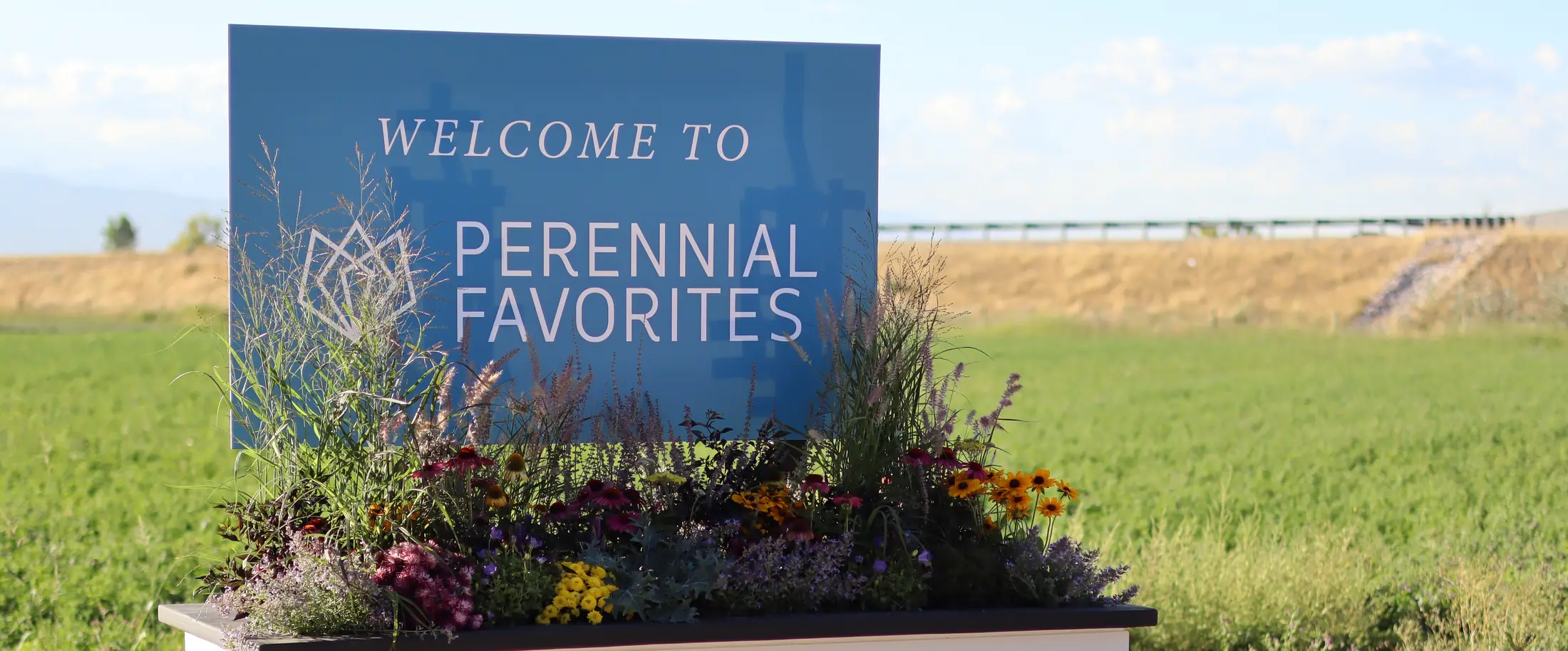
Welcome to Perennial Favorites sign in a planter of perennials and grasses
News · Wednesday, September 2, 2026

On September 2, customers, partners and friends joined us at our Layton nursery for a morning tour, lunch, and an afternoon of talks from seven speakers across the green industry. Here's how the day went:

Check-in
Website demo
Welcome
Nursery tour
Lunch
Speakers
7:30 AM

Check-in, breakfast, and a first look at the new website

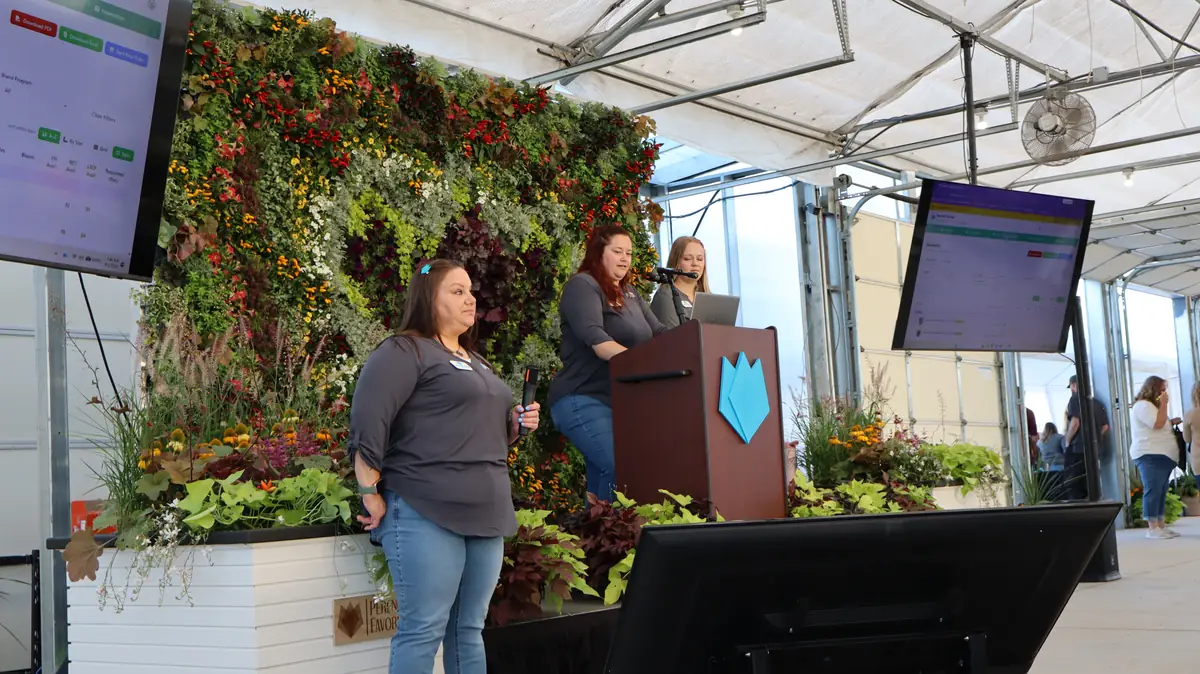
Guests checked in on the Sales Office patio, grabbed breakfast, and made their way into the Shipping Greenhouse, where our team gave an early demo of the new features on our website.
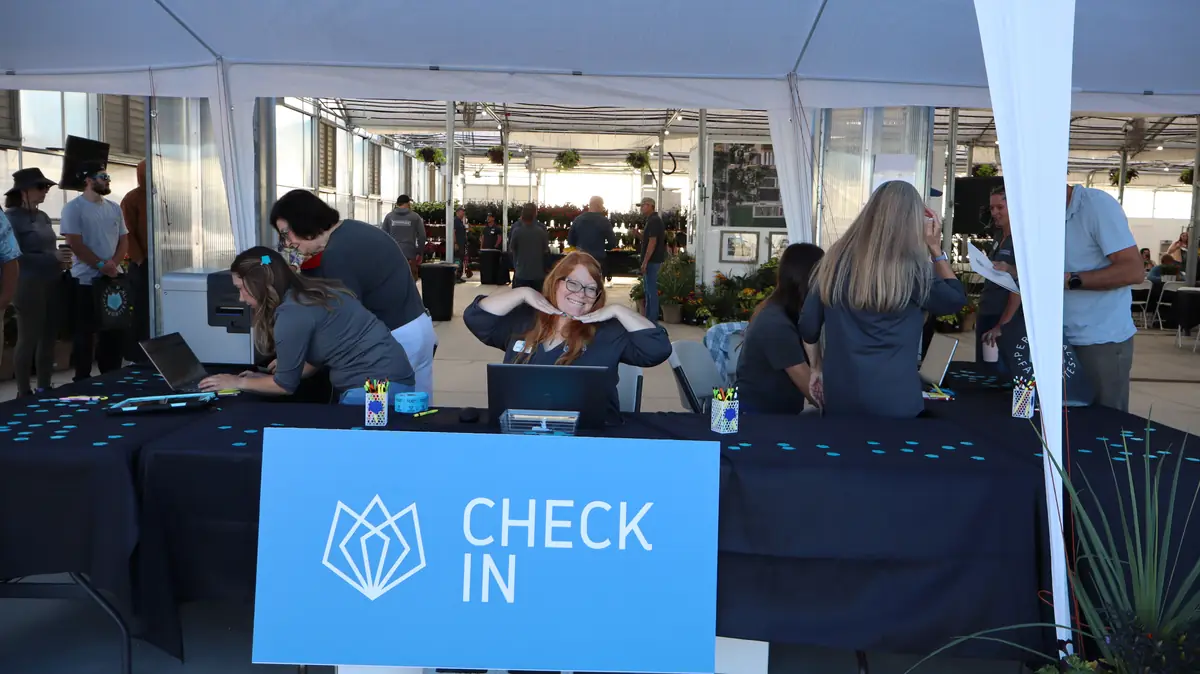
PF staff at the check-in table under the Check In sign
Check-in on the Sales Office patio.
Three PF team members presenting the website demo at the podium
The website demo.
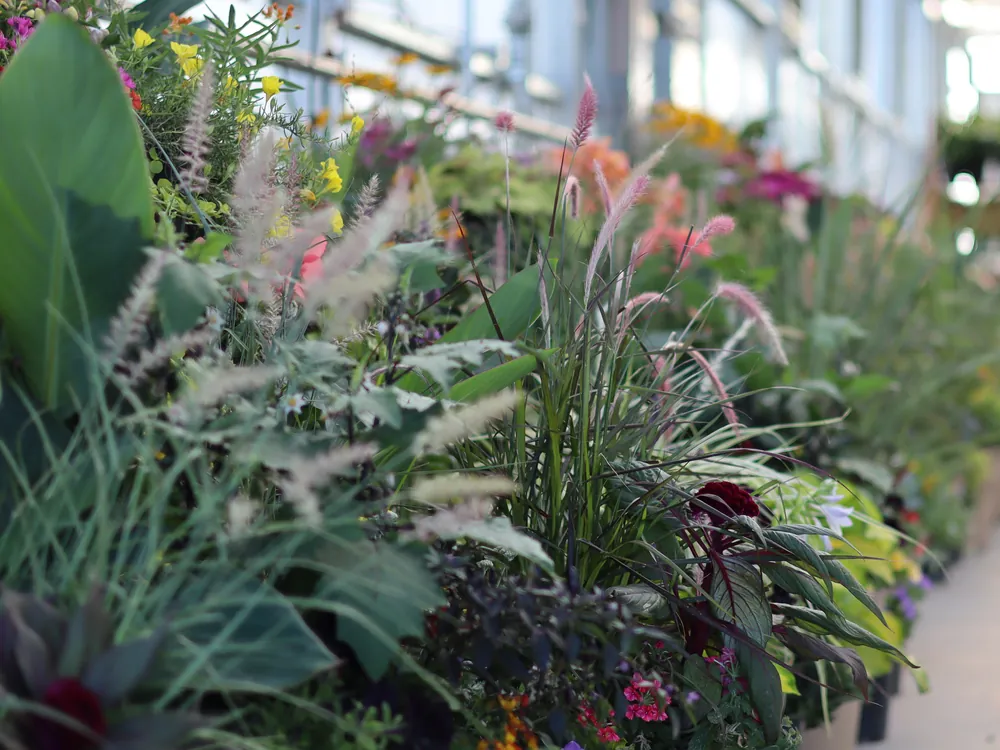
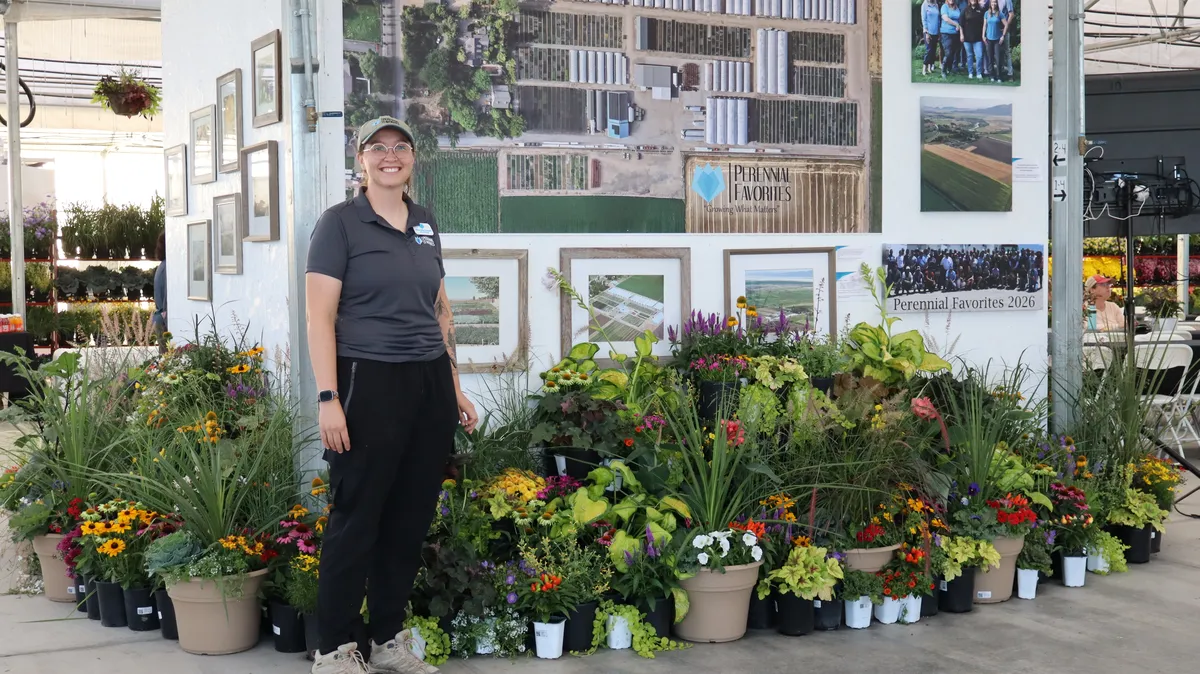
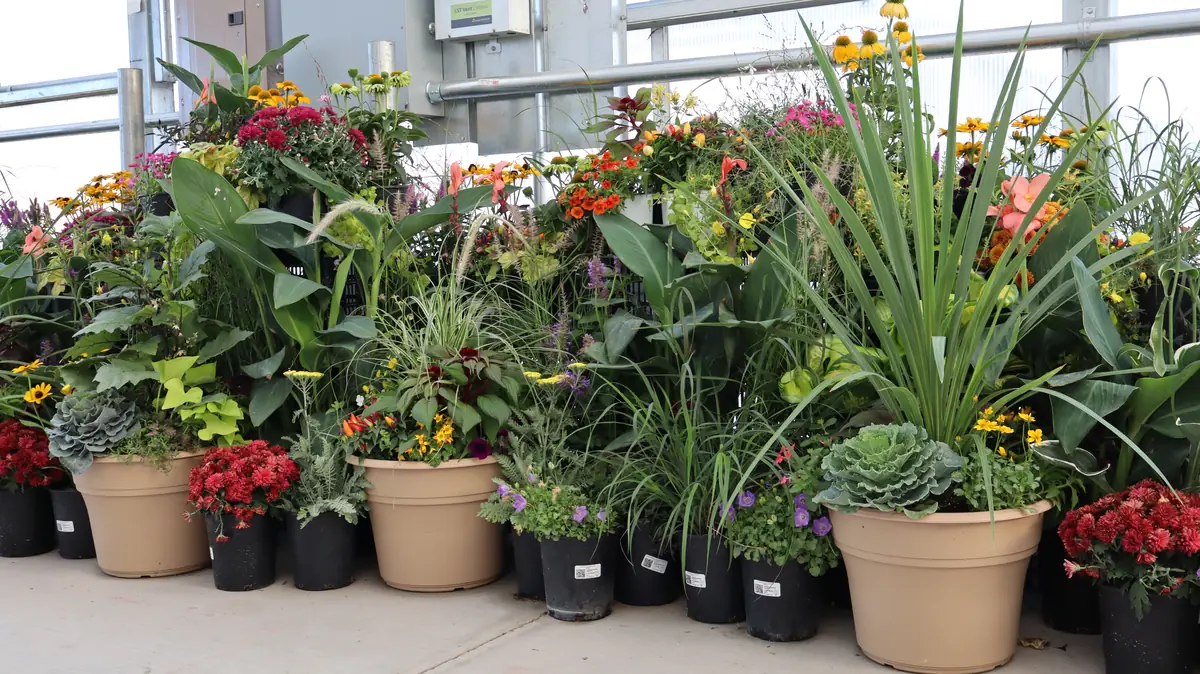
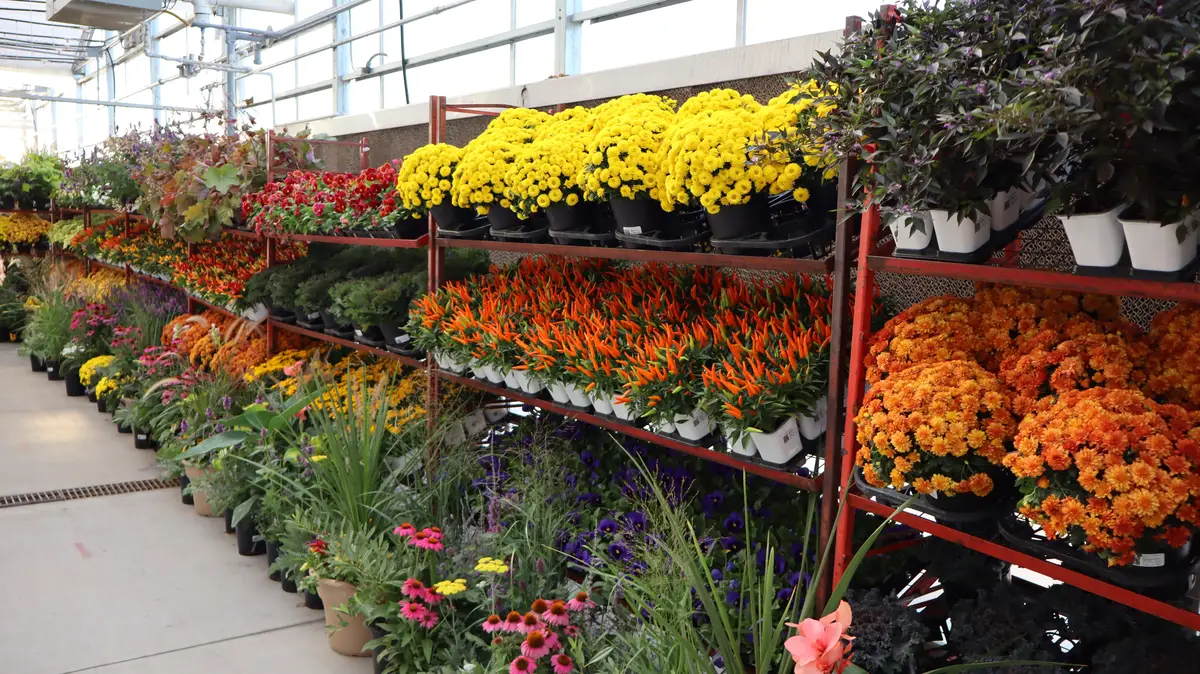
A long row of container plantings with ornamental grasses and flowers inside the greenhouse Macahl standing beside a display of perennials in front of the framed Perennial Favorites photo wall Container arrangements of perennials and grasses Racks of mums and colorful annuals on display
8:30 AM · Welcome

Where we started, and where we're headed
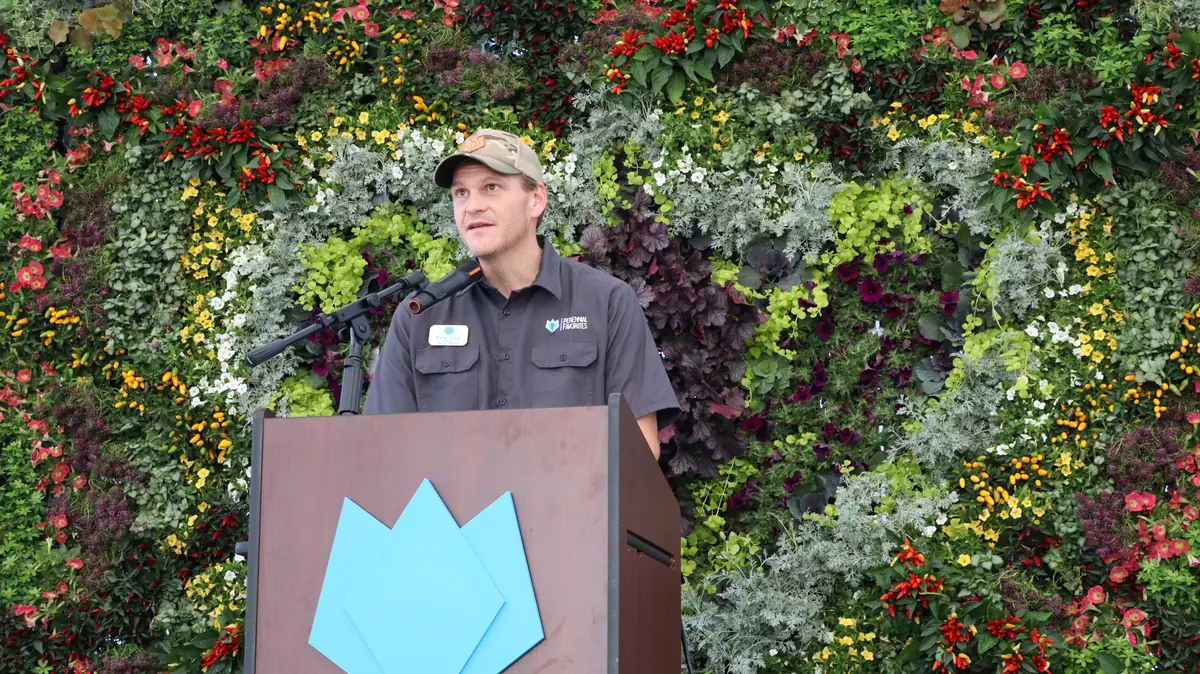
Ken Cox speaking at the PF podium in front of a living wall of flowers
Ken Cox opens the day.

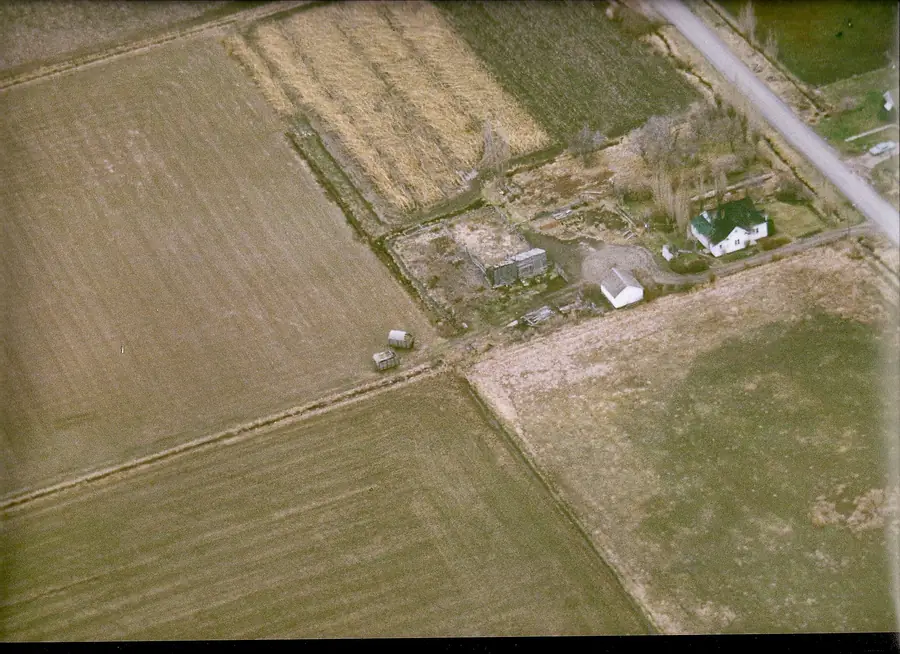
Ken opened the day with the story of Perennial Favorites. It started in 1992, when Preston and Melissa Cox saw a need for locally grown perennials that could handle Utah's climate. They began with two small grow beds behind their home, on land that was once part of the Scofield family farm. Two beds became four, then came the first greenhouses. In the early years, Melissa and her brother Mike loaded plants onto a small truck and trailer and visited nurseries up and down the Wasatch Front, building the business one customer at a time.

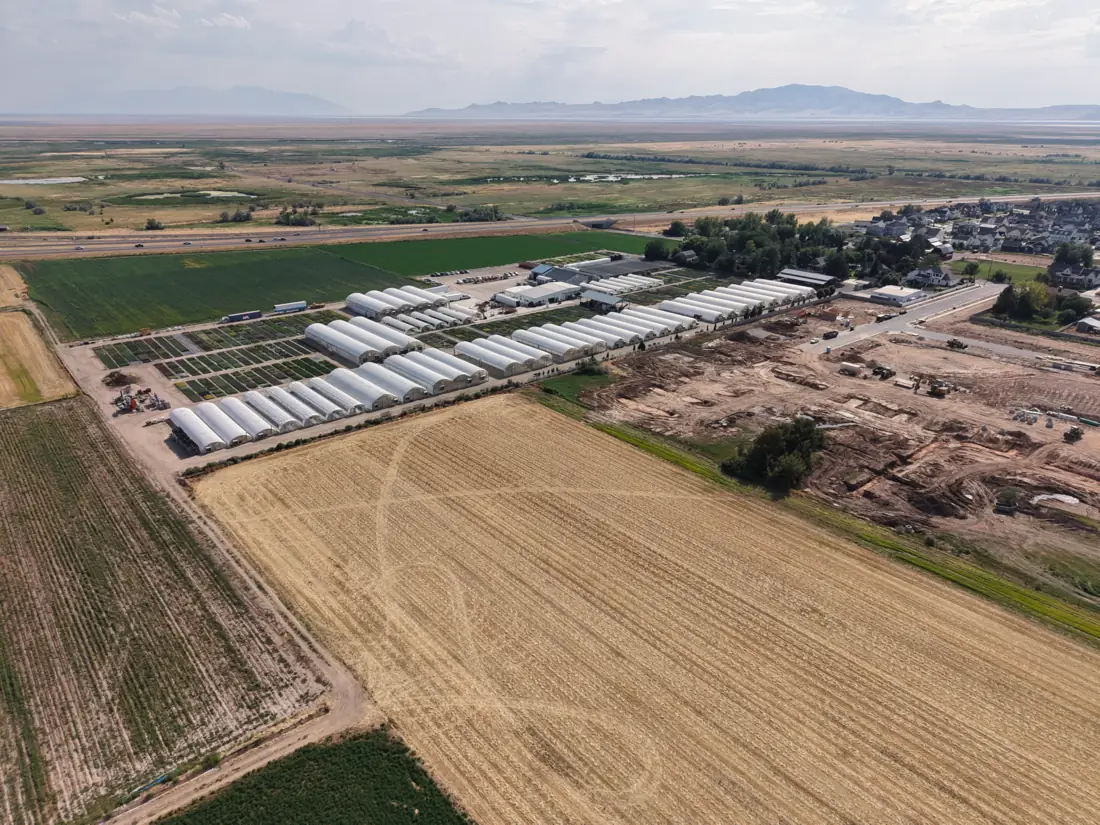
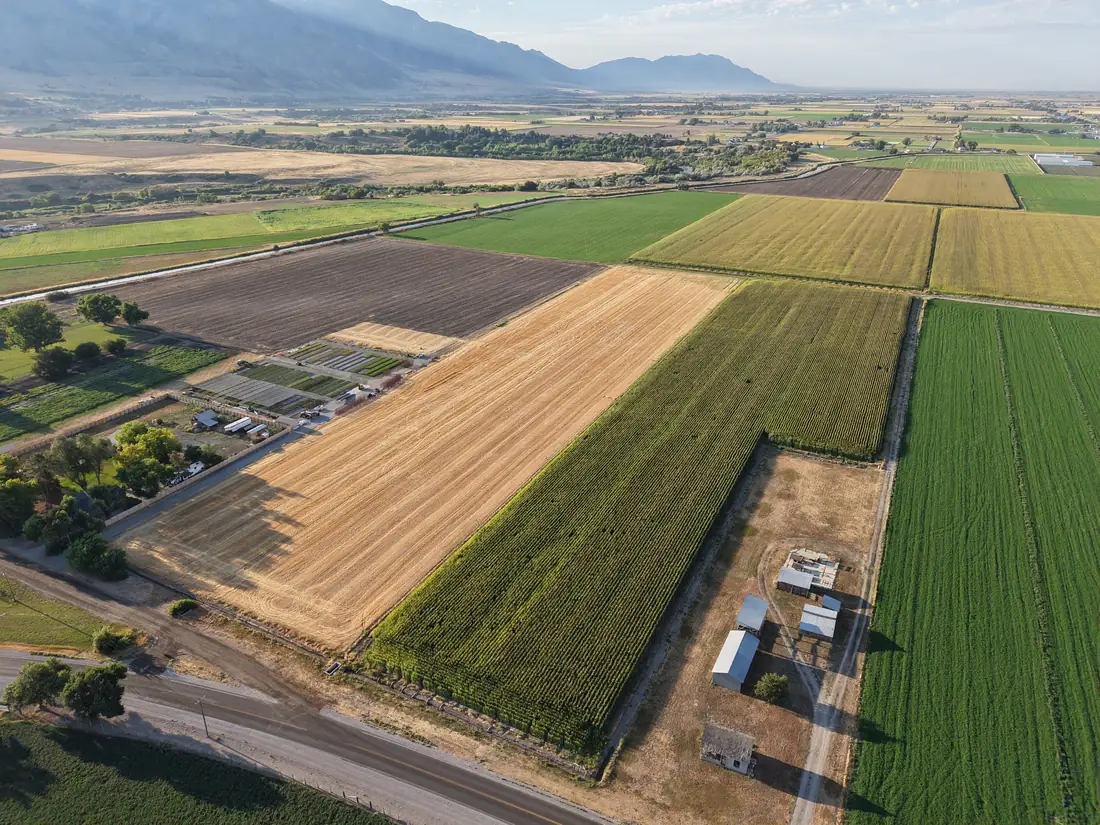
Today, between our Layton and Garland facilities, we grow thousands of varieties of perennials, annuals, grasses, edibles, and native and water-wise plants.
From Ken's presentation
Aerial photo of the farmland in 1972
1972The land, before PF.
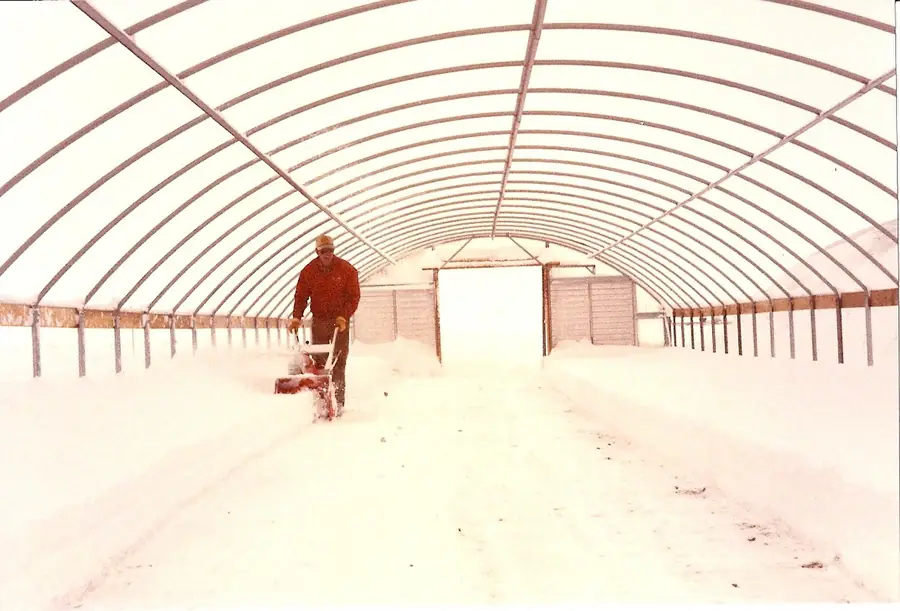
Preston Cox clearing snow inside the first greenhouse
1992Preston clearing snow from the first greenhouse.
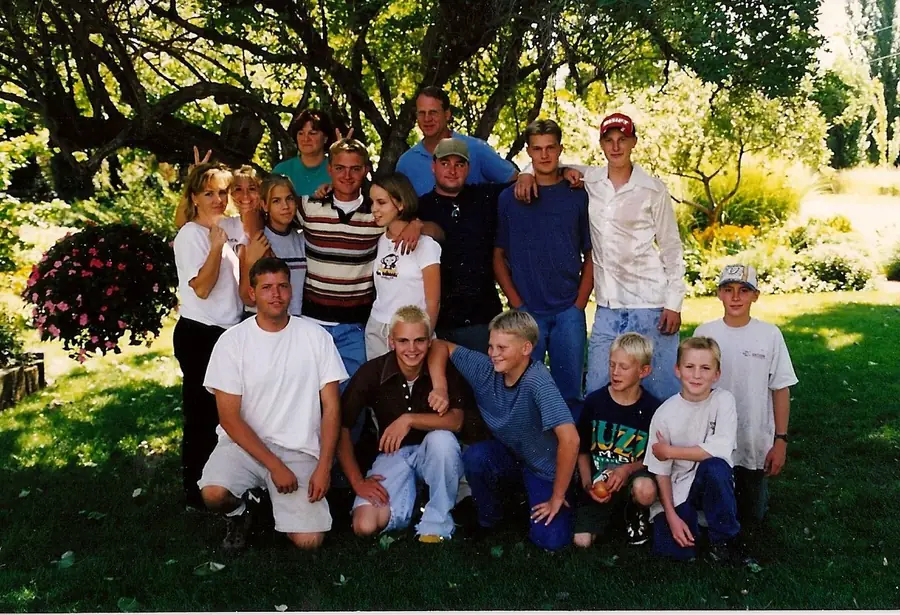
The PF team in 1998
1998The team.
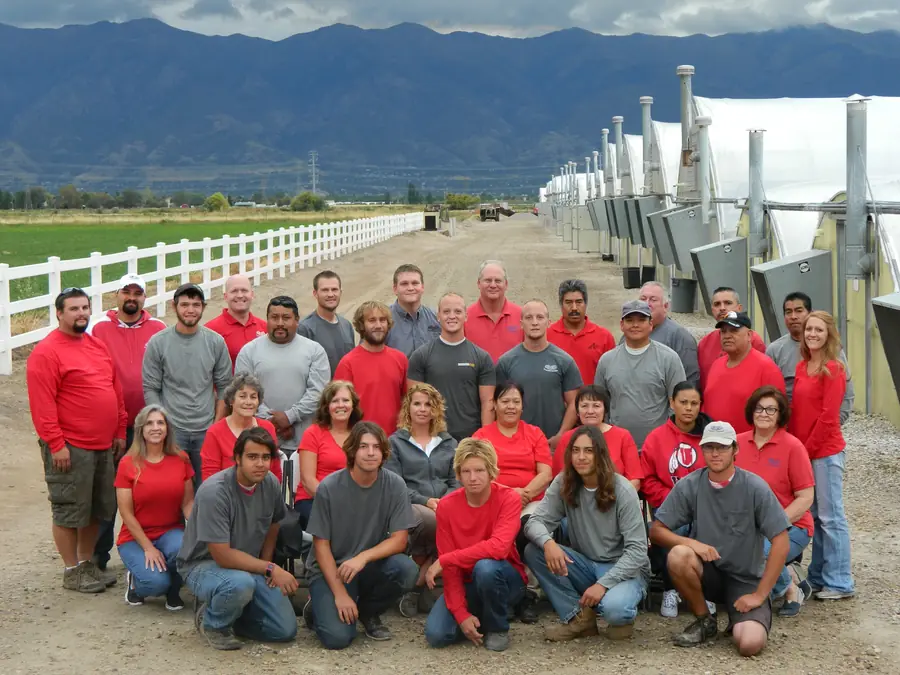
The PF team in 2012
2012The team.
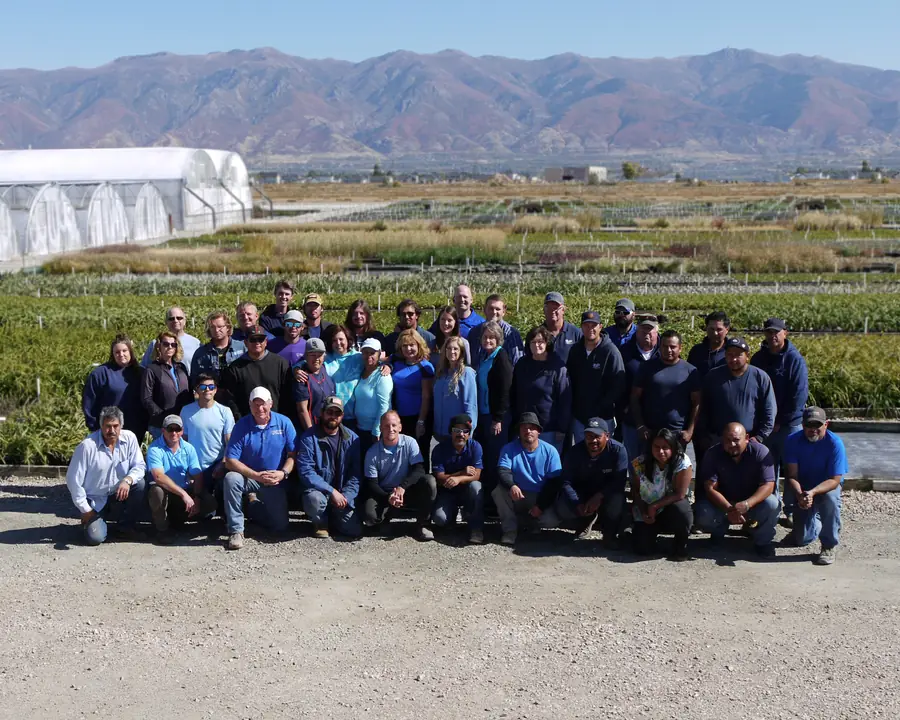
The PF team in 2019
2019The team.
The PF team in 2026
2026The team.
Aerial view of the Layton facility in 2026
Layton · 2026
Aerial view of the Garland facility in 2026
Garland · 2026

Ken also talked about what comes next. As Preston and Melissa prepare for retirement, Cort and Ken are taking on the primary leadership roles, backed by a team that has always been bigger than any two people. The West keeps growing, water keeps getting more valuable, and expectations for landscapes are changing. Our answer is smart plants in smarter landscapes: the right plant, at the right size, price and time.

"Our customers' success is our success."

Technology, and Iris

We've invested in online ordering, production and inventory tools, labeling and QR codes, and we're looking at RFID, automated scanning and AI. One example is Iris, the AI assistant we're using internally now and plan to open to customers in 2027. The goal isn't to replace horticultural knowledge, but to give knowledgeable people better tools.
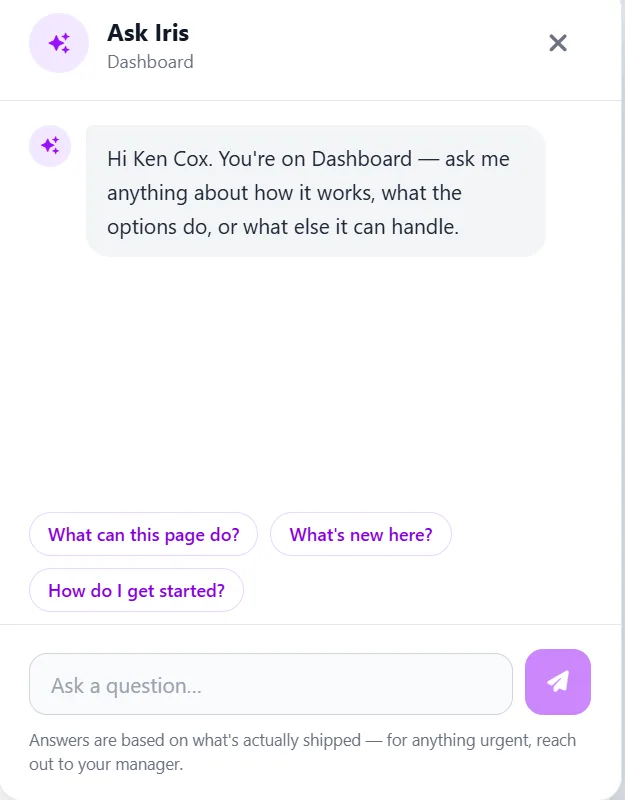
Screenshot of the Ask Iris assistant panel
9:00 – 11:20 AM

Take the tour

Guests split into small groups and rotated through five stops, 20 minutes each, with the people who run each part of the nursery. Pick a stop to see more.

11:30 AM

Lunch in the Shipping Greenhouse

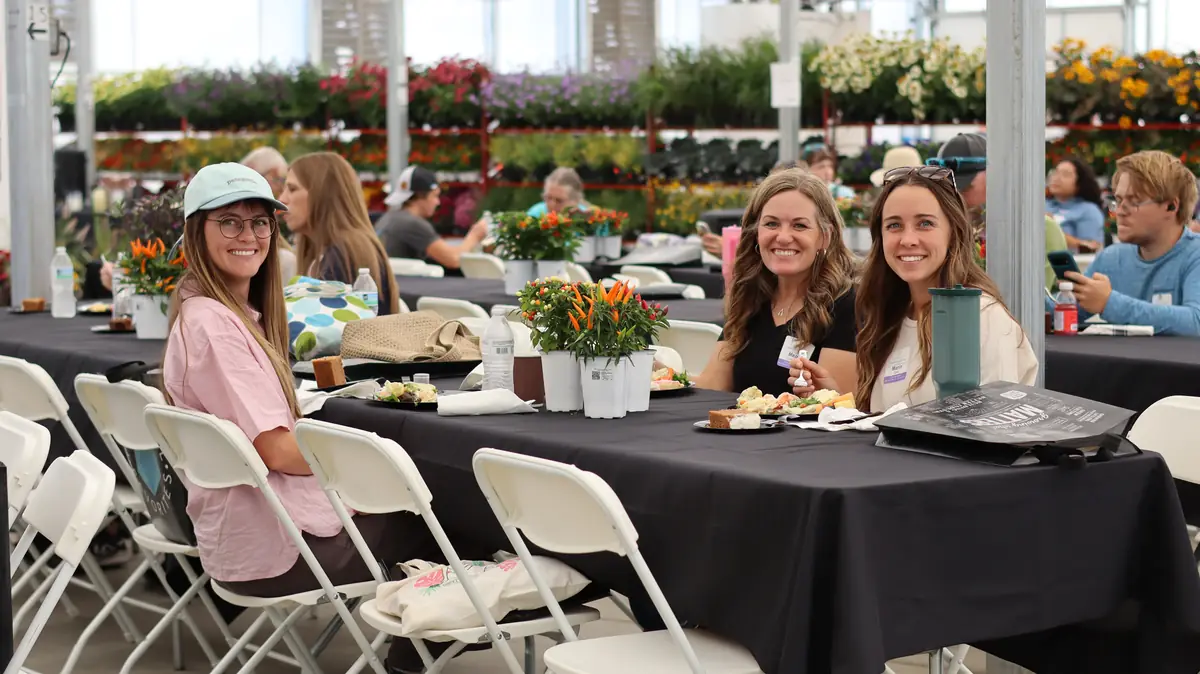
After the tour, everyone came back together for lunch and a chance to catch up before the afternoon talks.
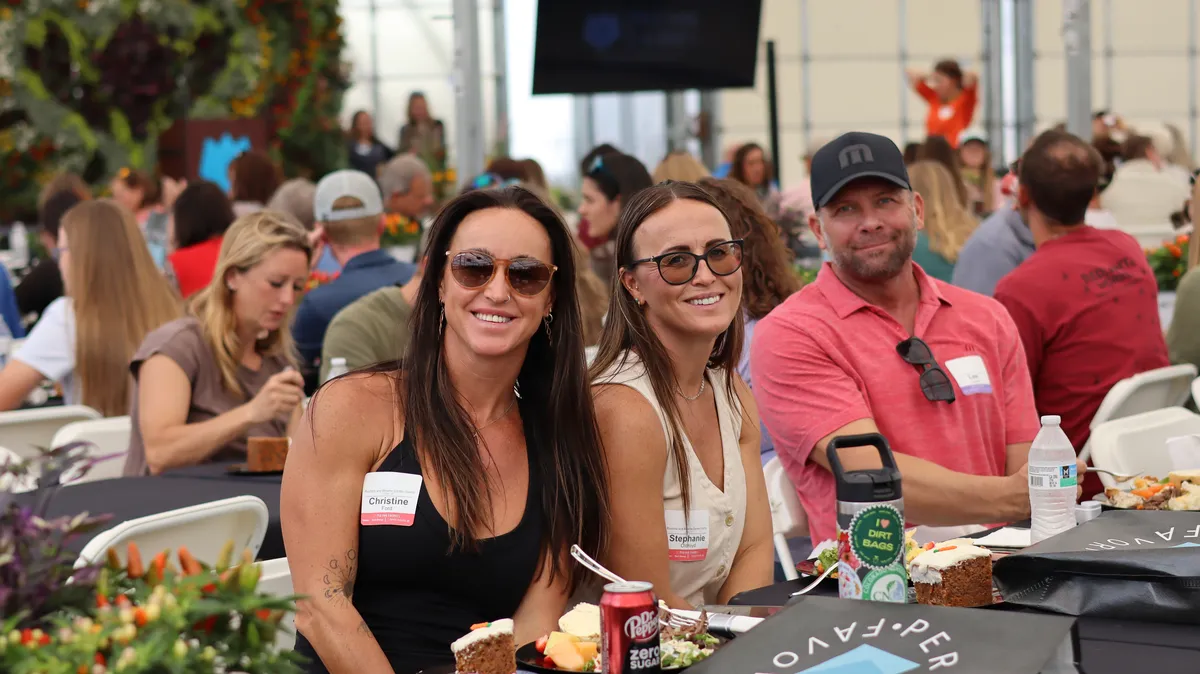
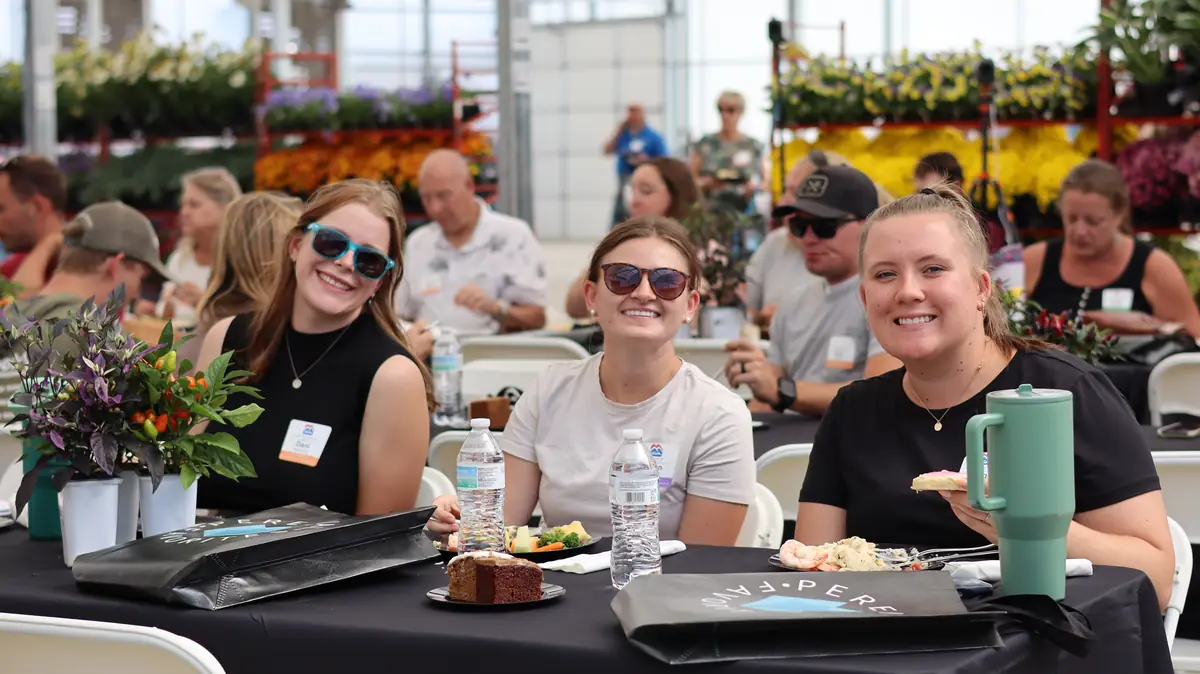
Three guests smiling at a lunch table in the Shipping Greenhouse, with the flower wall behind
Three guests smiling at their lunch table
Guests smiling at a lunch table with racks of flowers behind
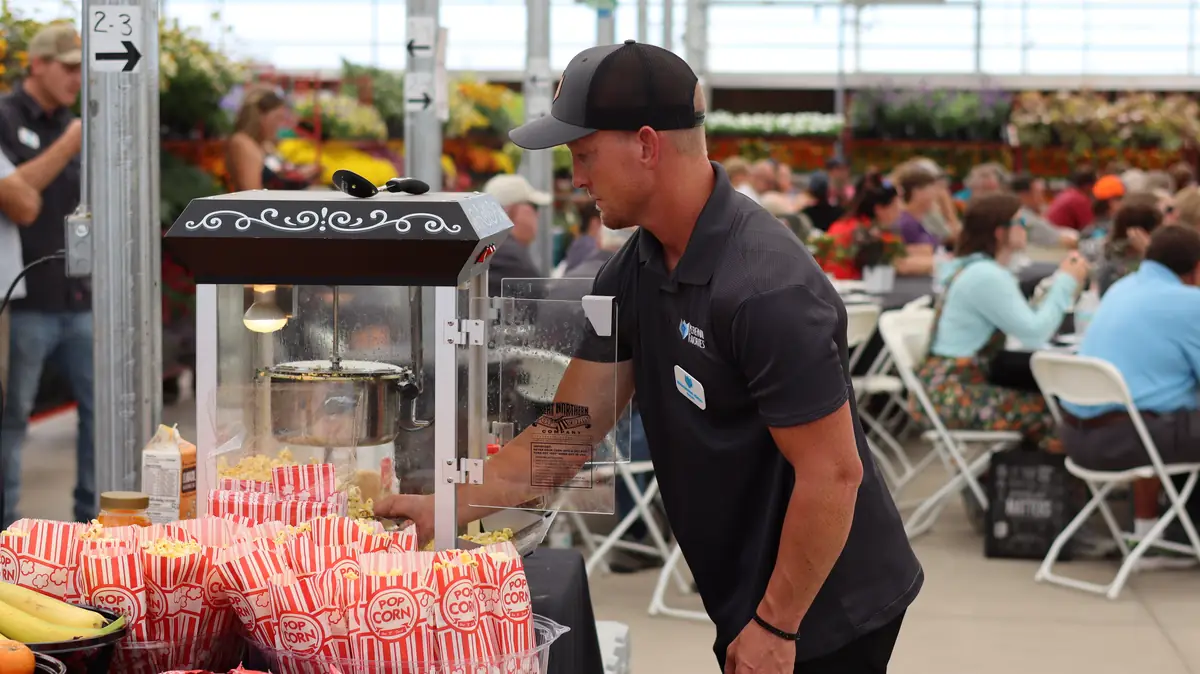
A PF team member filling bags from the popcorn machine
12:30 – 4:30 PM

Seven speakers from across the industry

The afternoon was livestreamed, and every talk is below, ready to watch. It covered propagation, growing media, water-wise landscapes, breeding, independent retail, native gardens, and bringing new plants from the wild into cultivation. Watch the full livestream.
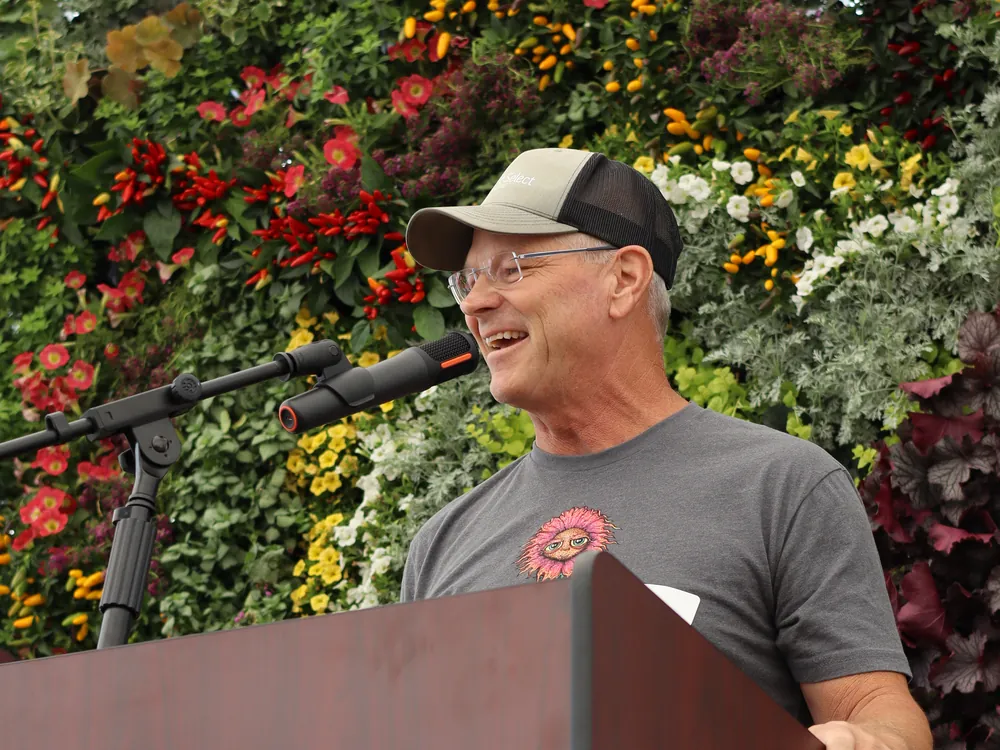
Ross Shrigley speaking at the podium in front of a living flower wall
Ross Shrigley · Plant Select

Paid to Propagate: Mitigating the 5-Year Financial Risk of Tree Growing

Executive Director of Plant Select, with more than 30 years in the nursery, landscape and public garden industries.

Watch the talk · 30 min
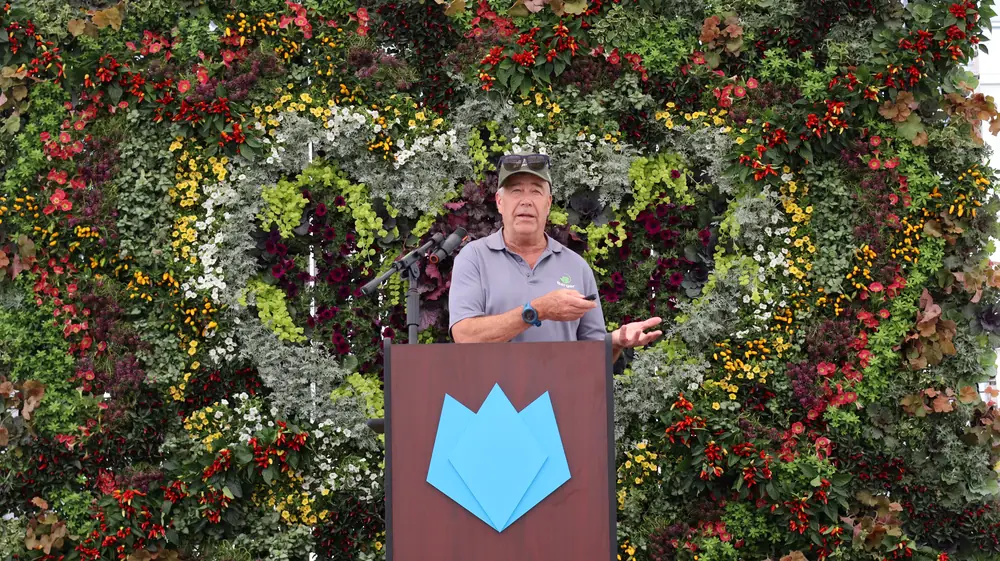
John Bergman speaking at the podium
John Bergman · Berger

Perennial Partnership in Substrate Sustainability

Berger's West Coast Grower Advisor, with more than 30 years managing production at large breeding and growing operations.

Watch the talk · 20 min
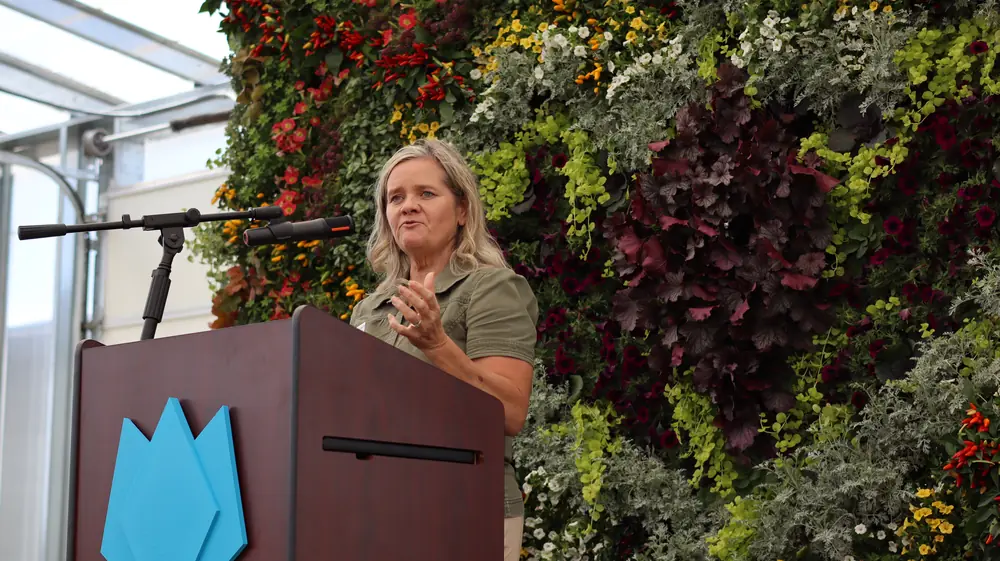
Cynthia Bee speaking at the podium
Cynthia Bee · Utah Water Ways

Rethinking Landscapes

Sustainable Landscapes Expert for Utah's Slow the Flow campaign and co-creator of Localscapes.

Watch the talk · 35 min
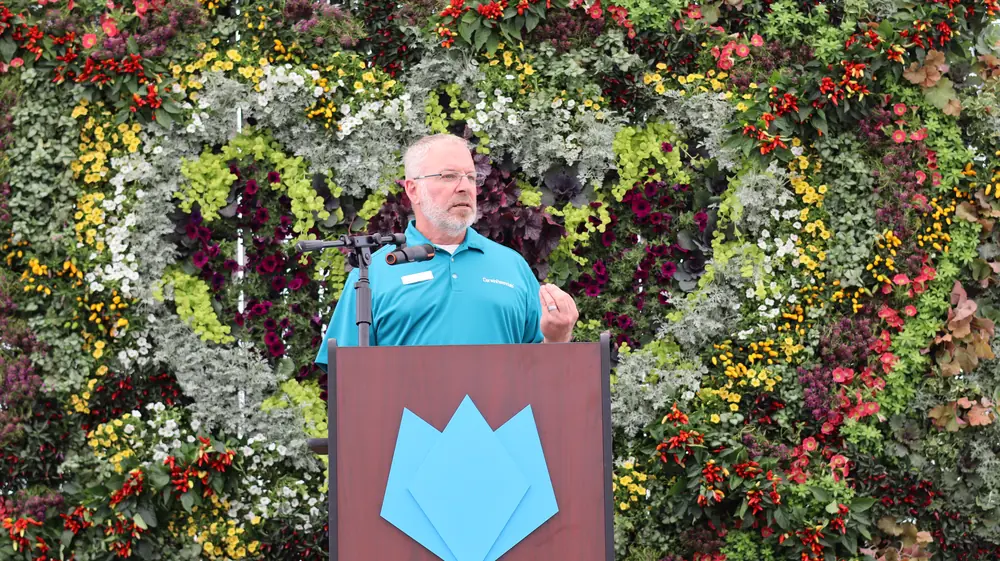
Chris Fifo speaking at the podium
Chris Fifo · Darwin Perennials

From Breeding to Beauty 2026

Perennial Products Representative and Technical Services advisor, with 30 years in perennial production.

Watch the talk · 36 min
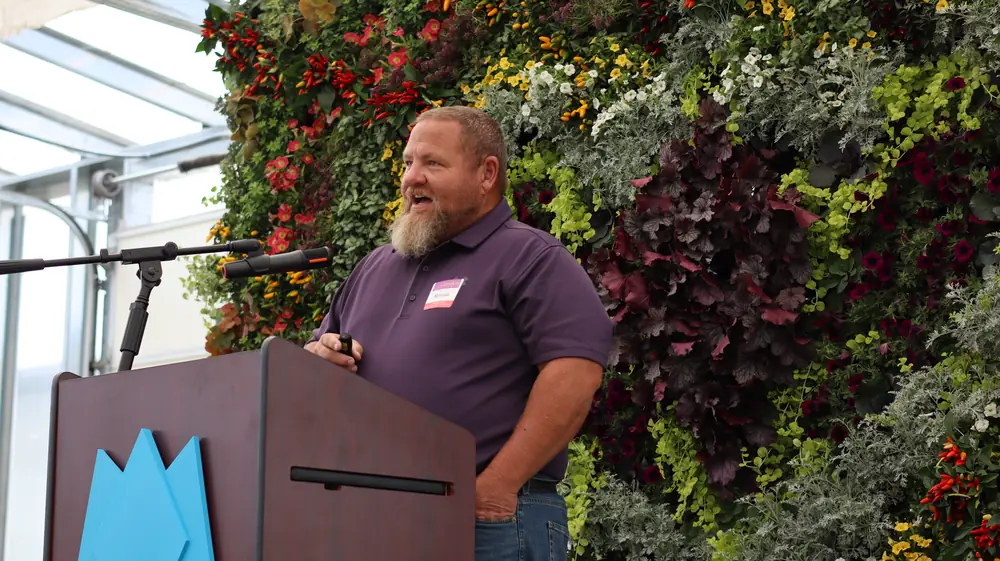
Moose Mountcastle speaking at the podium
Moose Mountcastle · Garden Gateway

Beyond Business as Usual

34 years as a grower, retailer, buyer and salesperson, and owner of Garden Gateway in Cache Valley.

Watch the talk · 25 min
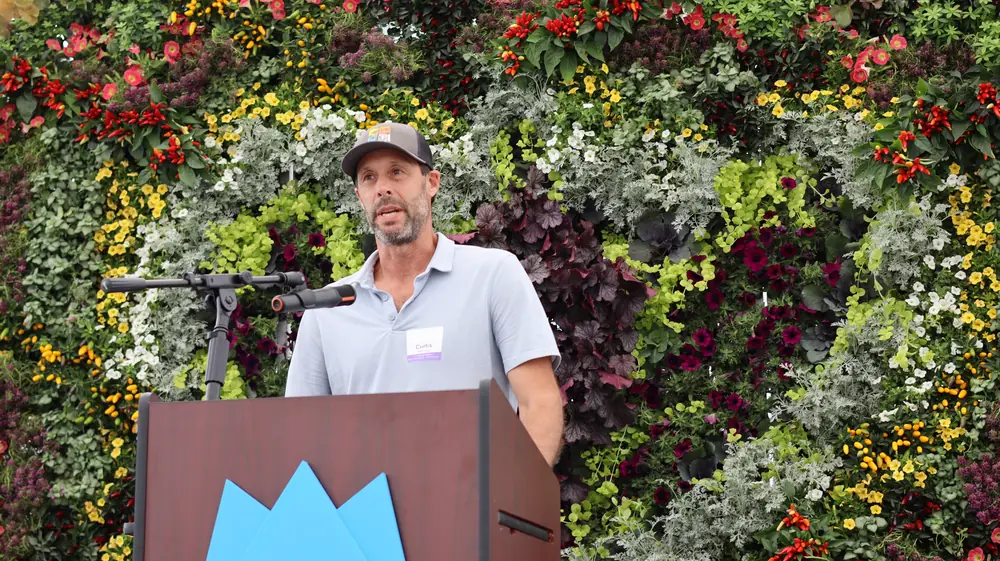
Curtis Manning speaking at the podium
Curtis Manning · Meadow Pro

Native Gardens in a Dry Climate: Soil Prep, Irrigation & Planting Regionally Appropriate Landscapes

Founder of Meadow Pro, which designs ecologically based landscapes, and perennial production manager at Blooma Farms.

Watch the talk · 28 min
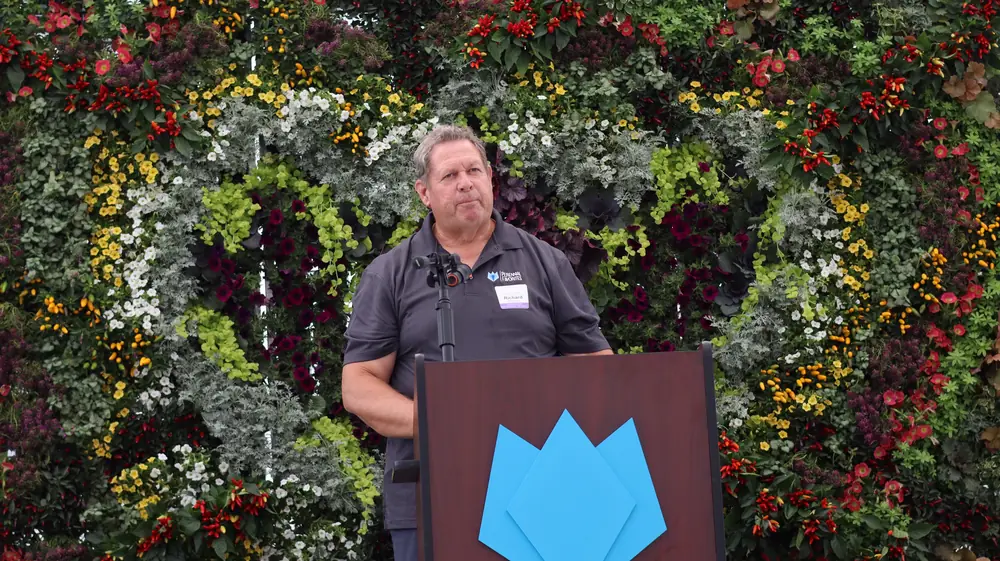
Richard Anderson speaking at the podium
Richard Anderson · Perennial Favorites

From Mountain Trail to Garden Path: Identifying, Evaluating, and Introducing Exceptional Perennials

Botanist and plant breeder, 20+ years at the Utah State University Botanical Center, and lead author of Wildflowers of the Mountain West.

Watch the talk · 29 min
4:30 PM

Closing remarks from Preston Cox

Preston Cox, who started Perennial Favorites with Melissa in 1992, closed the day by thanking our guests, our speakers, and the crew who made it happen.
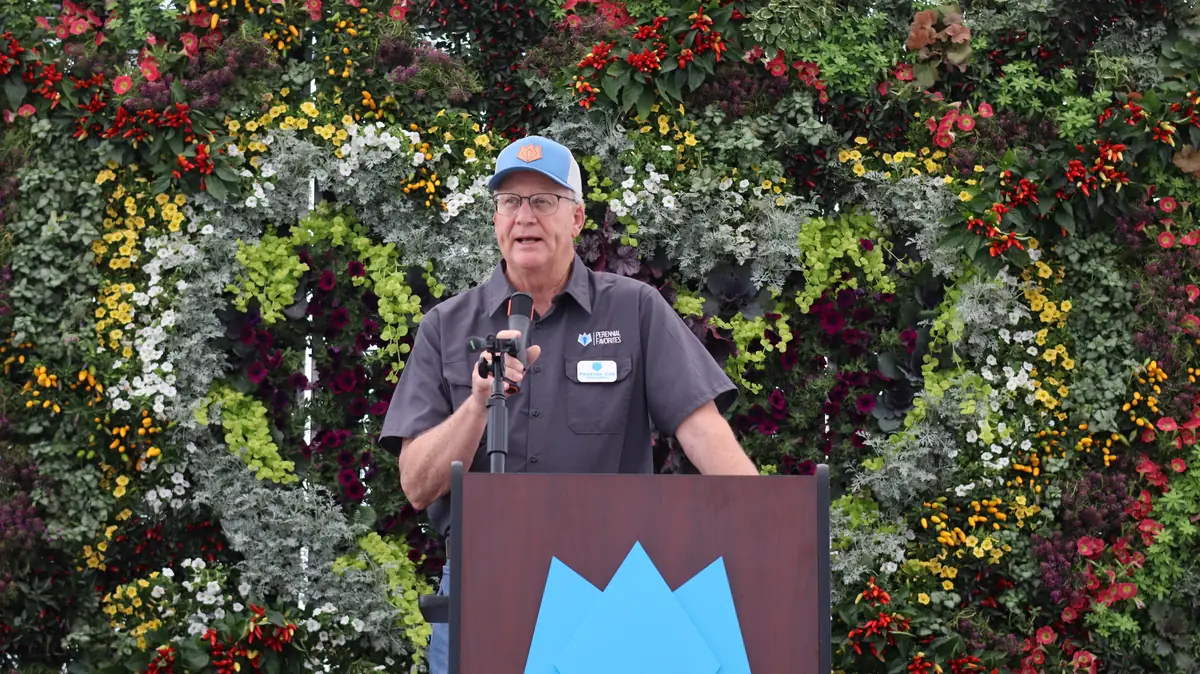
Preston Cox giving closing remarks at the podium
Preston Cox closes out the day.
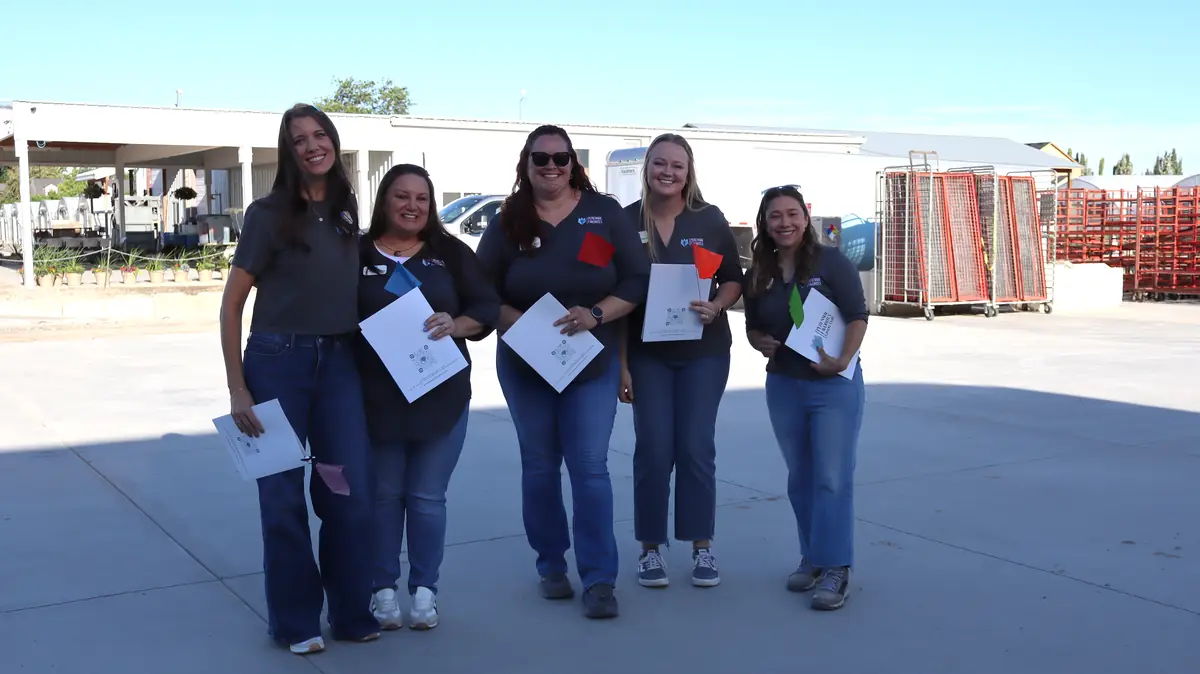
Five PF team members smiling in the yard with event programs
Part of the PF team behind the event.
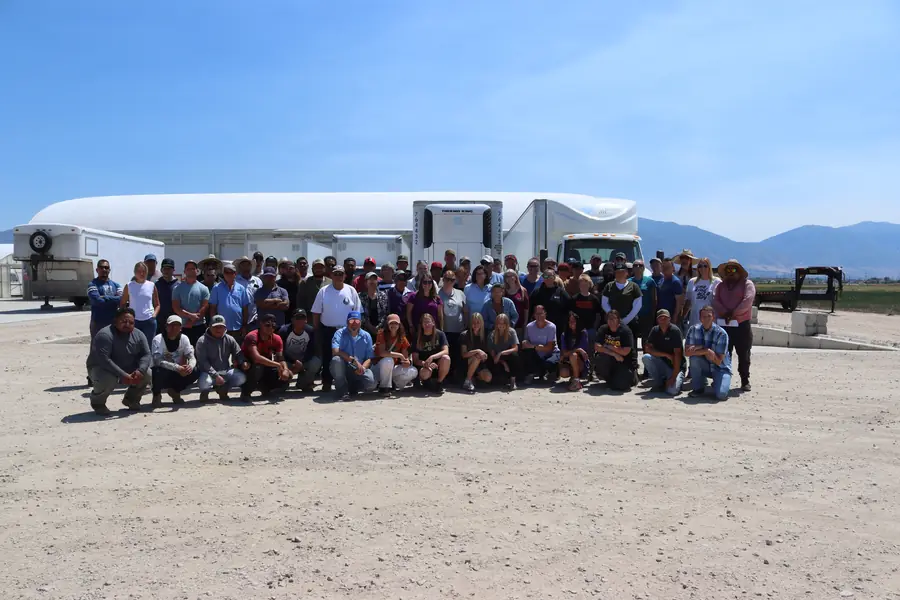
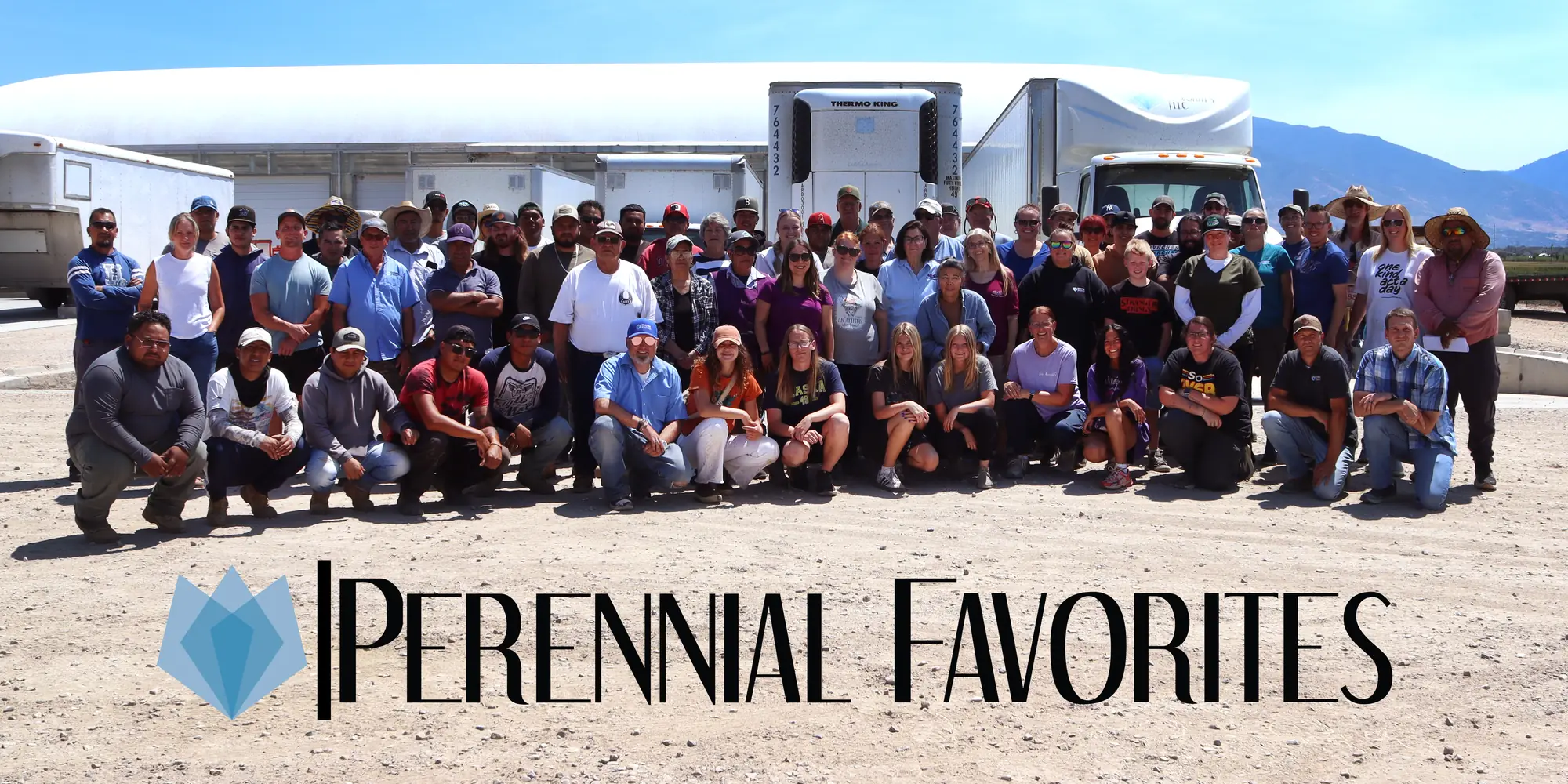
The full Perennial Favorites crew in front of the trucks and greenhouses, with the PF logo
The 2026 Perennial Favorites crew.

Thank you to everyone who joined us, and to our speakers for sharing their time. Couldn't make it this year? Call us at 800-966-8049 and we'll make sure you hear about the next one.

Stop 1 · Propagation House

Macahl and Jennifer led guests through our propagation houses, where every plant we grow gets its start as a cutting, a seed or a tissue-culture plantlet.

Propagation had about 1.1 million units scheduled through Open House week alone: 71% unrooted cuttings, 27% seed and 2% tissue culture, across a huge range of varieties with very different needs.

1.1Munits scheduled through Open House week
~60,000cuttings a week at peak
~160trays on each mist bed
11.5–16Kplugs on each mist bed

Most of our plants start as unrooted cuttings. They arrive from our suppliers, go into the cooler, then are stuck and set on the bench. Every variety has its own protocol for the type of cutting, rooting hormone, environment and rooting time.

  1. Receive
  2. Cooler
  3. Stick
  4. Bench

Seed comes from our suppliers or from specialty sources. Depending on the plant, it may be soaked, cold-stratified or given another special treatment before it's sown, by machine or by hand. Germination varies by species, seed lot and season. Guests got to see our seeding machine at work.

  1. Receive
  2. Pretreat
  3. Sow
  4. Germinate

In Prop 1 and 2, the goal is to push rooting while managing many different crops under one roof. Bench heat from our in-house boiler, a new mist system that adjusts to how quickly the air is drying out the cuttings, fogger fans, baffling, lighting and shade cloth all work together. As Macahl put it, "We're experts at maximizing the compromise." We can't create a perfect environment for every crop, so we create conditions that work reliably across all of them.

This year we also added a new propagation inventory system. It tracks what was scheduled, what was produced and what's ready, so we catch shortages earlier. It's a behind-the-scenes investment that means more reliable product for our customers. The biggest challenges are the ones you'd expect: very different crops sharing one environment, new and obscure varieties with no established protocols, seasonal differences, and constant testing and refinement.

Prop 3: holding, not pushing

Prop 1 and 2 are designed to push plants through rooting. Prop 3 has almost the opposite job, and guests could feel the difference in temperature and humidity as soon as they walked in. Built about two years ago, it stages and holds finished liners and plugs and houses our stock plants. Moving finished plants here frees up the active propagation benches faster, which increased our total propagation capacity.

Our stock program keeps about 140 varieties. A stock plant isn't just a plant. It's future production material. Cutting quality depends on timing (time of year, time of day and the plant's stage), on the type of cutting (juvenile or mature, soft or woody, tip or basal) and on its source: a dedicated stock plant, production inventory, a plug or an outdoor stock bed. Different sources can give very different cutting quality and rooting results.

Macahl then demonstrated a collection: what makes a good tip cutting and what gets rejected, why we take basal cuttings from plants like Agastache, and how we divide Ephedra and Veronica (Veronica two different ways). The collected material went into the cooler, just like a real collection.

Stock needs constant oversight. It has to be ready when cuttings are scheduled, kept at sustainable numbers and refreshed once it has served its purpose, since older plants bring more maintenance and pest problems. We scout diligently, use targeted treatments and rely on biocontrols (predatory wasps, predatory mites, lacewings, Orius and Cryptolaemus) to keep clean material going into propagation.

Adding a new plant comes down to three questions. Can we find it commercially, and if not, can we realistically maintain stock ourselves? Can we propagate it, by which method, and with what expected loss? And can we do it successfully again? Repeated success is what gives us confidence, and that can take multiple seasons or even years.

  1. Sourcing
  2. Protocol
  3. Repeatability

Propagation isn't just sticking cuttings or sowing seed. It's managing plant biology, environment, timing, sourcing, inventory and repeatability together, taking something naturally variable and making it consistent enough to produce reliably at commercial scale.

Stop 2 · Shipping House

With the shipping crew working live behind them, Ken walked guests through what happens after a customer clicks Submit Order, from an electronic order to a rack of plants ready for the truck.

Sales reviews every order for availability, quality and special instructions. Once it's confirmed, the order goes to Shipping, where it's routed to a truck and assigned to a pulling crew. Our custom pulling app shows the crew the exact crop, quantity and current location of every plant, so there's no guesswork as crops move around the nursery.

Pulled racks are watered and staged, and our system prints retail labels straight from the customer's order, in the same order the plants were pulled, with customer branding, pricing and plant information. The processing line does another quality check, cleans and deadheads, labels and verifies counts. Each rack gets a final count and a rack label with the customer, order number, counts and truck stop.

  1. Submit
  2. Review
  3. Confirm
  4. Route
  5. Assign
  6. Pull
  7. Water
  8. Label
  9. Process
  10. Verify
  11. Ready to load

Our systems handle the complexity so our people can focus on the plants, and on getting customers exactly what they ordered.

From our dock to your door

Jason Lewis, our Fleet Manager, picked up where Ken left off, with loading and delivery. We treat delivery as the last step in the growing process, not just transportation.

Our fleet runs from 53-foot semis for big seasonal loads, to straight box trucks for weekly top-offs and tighter drop spots, to gooseneck truck-and-trailers up to 32 feet, with extra box trucks added in season. Plants ride enclosed from our dock to yours, out of the weather.

Inside, they travel on rolling racks and custom shelving built for high-density crops, locked down so nothing shifts, tips or gets crushed, on air-ride suspension that cushions root balls and blooms. Our drivers know they're hauling live plants, not freight. They watch plant condition and transit time the whole route, double-check every manifest, and unload with smooth lift gates, leaving you a clean drop space and stocked shelves.

Peak season90 days
  • 63 days on the road
  • 367 hours of driving
  • ~16,000 miles
Rest of the year270 days
  • 122 days on the road
  • 378 hours of driving
  • ~14,500 miles

Average per truck. Peak season packs about as much driving into three months as the other nine combined.

The goal: the quality we grow in our greenhouses is exactly the quality you receive.

Stop 3 · Production

Adam Rigby, our Production Manager, welcomed guests to the planting shed, where plugs become the finished pots that ship to you.

Production plants for about 10 acres here at the nursery, and for the last couple of years for our Garland facility, an hour north. Here that means 26 greenhouses, 12 D-frame houses and 151 outdoor beds, each holding 2,200 to 3,300 gallon pots.

1.6M+plugs planted this year, as of September
22,000plugs a day at full speed
2 × 6planting lines × crew per line
564soil towers used last year

TV screens and handheld tablets show the crew the day's queue: the pot size, where each crop is headed and how many of each variety to expect. A soil tower rides the elevator up the Pack machine, and sensors in the hoppers drop soil onto the conveyor as it's needed. We go through up to five towers a day of Berger mix, about 60% peat moss and 25% natural fiber, plus perlite, lime and a wetting agent.

  1. Soil
  2. Fill pots
  3. Dibble
  4. Plant by hand
  5. Label
  6. Water & feed

A crew member marks each pot with a dibble, and every plug is planted by hand. Down the belt, the Label Gator, an automated print-and-apply labeler from Great Lakes Label, tags each pot, replacing slow hand labeling. In the watering tunnel, every plant gets two treatments: Nutriculture, a water-based nutrient feed for fast root growth and a steady supply of food, and mycorrhizal fungi, which grow a web that works like extra roots. It helps the plant reach hard-to-get minerals like phosphorus and come through transplant shock much better.

On the gallon line, Echinacea, lavender, Gaillardia, Perovskia, Phlox paniculata and ornamental grasses (except blue fescue) also get wood chips, which hold in moisture, keep the plants from drying out and hold down weeds.

This season, 22 H-2A seasonal workers, our "Amigos," are part of the production crew. Some are here for three months, some for ten. It's a big sacrifice to be away from their families that long, and we're glad to have them.

As Adam put it, flowers feed pollinators like bees and butterflies, support local biodiversity, hold soil in place and clean the air. We're proud of what we grow.

Stop 4 · Outdoor Growing

Hosted by Cort Cox and Ethan.

Stop 5 · Trial Garden

Hosted by Adrea Dent.

Categories: News

0 Comments

Leave a Reply

Avatar placeholder

Your email address will not be published. Required fields are marked *